Thursday, March 31, 2016

Competition at Its Best

Nice guys finish last. At least, that's what Freddy Benson (Steve Martin) and Lawerence Jamison (Michael Caine) believe in the 1988 comedy film Dirty Rotten Scoundrels. The story follows these two men as they compete to swindle wealthy women out of money. But, they have two very different ways of approaching their chase.

Lawerence Jamison, the debonair, aristocrat, has gained his wealth from preying on exceedingly wealthy and corrupt American women vacationing in his French hometown Beaumont-sur-Mer. With the help of his friend in the police force, he spins a tale that centers on him as the poor Prince trying to liberate his country. It works, as evidenced by one of his victims who says, "Oh, your highness, I don't want money from a man who needs every penny to feed his enslaved people." But, while Lawerence is intentionally deceitful, he vows to only con women who can afford it.

Then, there's Steve Martin's character, Freddy Benson, an American con-artist who will target anyone who falls for his sob story about his grandmother:
"She's been quite ill lately. The hospital bills have been adding up. I just want to do my share. It's tough for me because I was never good with money... But I am going to help my Gram-Gram. She is the one who taught me: it is better to be truthful and good, than to not."


The two meet when Freddy is on the way to Beaumont-sur-Mer with big plans of scamming the local population. Seeing Freddy as competition that might "scare big game away," Lawerence decides that  he needs to get rid of him - fast. After his attempts to mislead Freddy into leaving Beaumont-sur-Mer do not work, Lawerence decides to keep his enemy close and teach him his ways. The two of them tag-team with Lawerence acting as the suave Prince in need and using Freddy as his mentally challenged brother to scare the women away after the money has been collected. After awhile, Freddy becomes frustrated with his secondary position and decides to go back out on his own.


The two reach an impasse as neither is willing to leave the area. They decide to make it into a final competition: the first of them to con $50,000 out of a rich, but naive American heiress will be allowed to stay. The loser will leave. The two select Janet Colgate, a young lady who fits the description, and venture into their schemes. As the two compete for Janet's purse, they are constantly spying and adapting to each other's tactics in order to beat out the other person.

While this film does not have much base in reality, it does hit on some common American trends. For example, in the U.S. we have always valued those who work hard and move up the ladder due to their own accomplishments. The women "victims" in the movie were born into extreme wealth and have never felt the hardship of working. So, even though the women are being taken advantage of, we don't see them as victims. In fact, we see Freddy and Lawerence as the anti-heroes who use their cleverness and charm to deliver a Robin Hood-esque justice (even if they do not share their spoils). While this film is a fun and entertaining watch, it also gives us a window into the American ethos.

Now, I must disclose, that this is one of my favorite movies (if not, the favorite movie). So, I highly encourage you to watch it. But, if you don't have a chance, here are some of the best quotes:

Freddy Benson: I didn't steal any money! She just saw me with another woman! You're French, you understand that!

Policeman: To be with another woman, that is French. To be caught, that is American.


Freddy Benson: Listen. We're the weaker sex. Men don't live as long as women. We get more heart attacks, strokes and prostate trouble. I say, it's time for a change. I say, let them give us money. Let's live off them for a while.

Photo courtesy of Wikipedia and videos courtesy of MovieClip

Sunday, March 20, 2016

For the Stars and the Stripes

Have you ever thought your life was a failure? How did you recover from that? What did you do? What was your next step?

In Stripes, a military comedy film released in 1981, the main character, John Winger (Bill Murray), loses his job, his car, his apartment, and his girlfriend, all within a few hours. Believing his life is a failure, he decides to join the United States Army. Not wanting to go alone, he ropes his friend Russell Ziskey into embarking on this adventure with him.

The two set off for basic training at Fort Arnold. Throughout training, John's good humor, and occasional questioning of authority, lead him to stand out from the other recruits (not in a good way). He and the other recruits manage to scrape by through most of their training leading up to graduation. Although, only a little before graduation, the group's drill sergeant becomes injured, leaving them in the hands of the inept commanding officer, Captain Stillman. With no one to lead them, it becomes unclear whether the group will actually be able to graduate into the military.

The night before the graduation ceremony, John gives the group a motivational speech and convinces his fellow trainees to spend the night drilling in preparation for graduation. The next morning, they sleep in and almost miss the graduation ceremony. But, they manage to deliver a coordinated, if untraditional, drill display that (surprisingly) wows the General. The General allows them to graduate and decides to deploy them to Italy.

In Italy, their assignment is to guard an assault vehicle, but John and Russell get bored with their duty and decide to take the vehicle to go visit their girlfriends (from basic training) who are stationed in West Germany. When Stillman realizes that the vehicle is missing, he leads the remaining platoon members on a search. The platoon accidentally ends up in Czechoslovakia where they are captured. John and Russel hear of the capture and realize they must go find their friends. John, Russell, and their girlfriends must save the platoon by infiltrating a Russian base.

This extremely hilarious movie makes light of what was a tension-filled time in American history. During the time the movie was released, the Cold War was souring US-Soviet relationships and many people still remembered World War II. While the movie wasn't strictly anti-war, it in many ways, reflected the anti-establishment feelings of the time. John Winger's character continues to question military authority throughout the film, showing the skeptical attitude of the 1980s youth. While it makes for some funny conversations, the sentiment beneath the humor resonates with this generation.

Now, for some of my favorite quotes:

Army Recruiter: Have you ever been convicted of a felony or a misdemeanor? That's robbery, rape, car theft, that sort of thing.

John: Convicted? No.

Russell: Never convicted.


Russell: I've always been kind of a pacifist. When I was a kid, my father told me, "Never hit anyone in anger, unless you're absolutely sure you can get away with it." I don't know what kind of soldier I'm gonna make, but I want you guys to know that if we ever get into really heavy combat... I'll be right behind you guys. Every step of the way.


John: We're all very different people. We're not Watusi. We're not Spartans. We're Americans, with a capital 'A', huh? You know what that means? Do ya? That means that our forefathers were kicked out of every decent country in the world. We are the wretched refuse. We're the underdog. We're mutts! ...We're all very, very different, but there is one thing that we all have in common: we were all stupid enough to enlist in the Army. We're mutants. There's something wrong with us, something very, very wrong with us. Something seriously wrong with us - we're soldiers. But we're American soldiers! We've been kicking [butt] for 200 years! We're ten and one! Now we don't have to worry about whether or not we practiced. We don't have to worry about whether Captain Stillman wants to have us hung. All we have to do is to be the great American fighting soldier that is inside each one of us. Now do what I do, and say what I say. And make me proud.

Photo courtesy of Wikipedia

Thursday, March 17, 2016

The New "Who Dun It?"

You may have heard of a "whodunnit" story, but what about a "howcatchem?"

For those of you who have no idea what I'm talking about, "whodunnit" generally refers to a storyline where the audience follows the narrator as he or she tries to discover who committed a crime. The audience forms their own opinion throughout the story, reformatting it when new evidence comes to light. This type of storytelling became popular in the early 20th century and by the middle of it, some people wanted to find a new way of exploring a mystery that would still engage the audience.

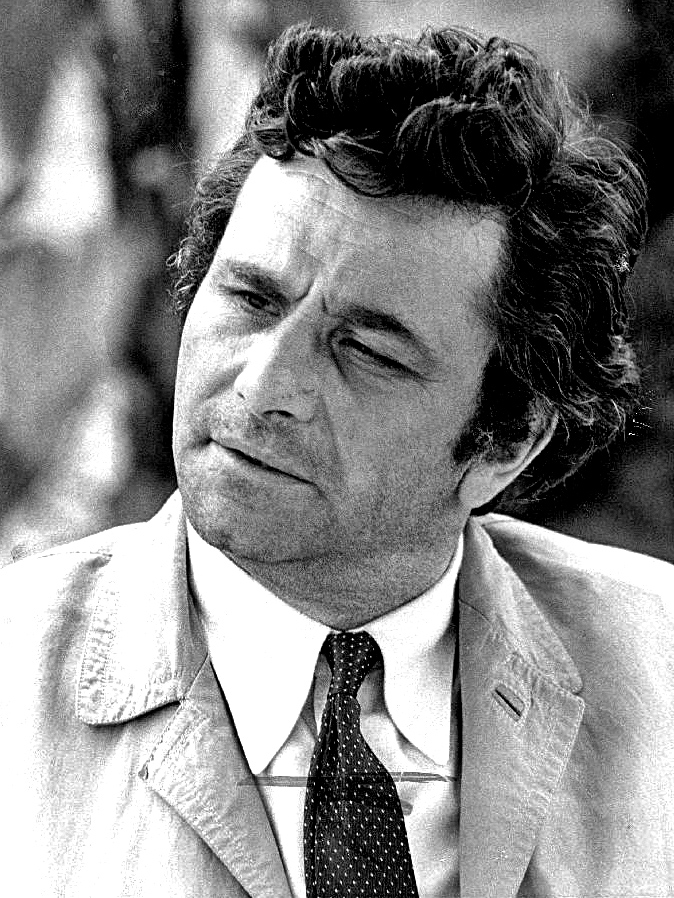
In the early 1960s, William Link and Richard Levinson decided they were going to do just that and they created what they called the "howcatchem" story through the TV series Columbo. Instead of focusing on who committed the crime, the series instead centers on how they are caught. At the beginning of every episode, the audience sees the criminal committing the offense. Then, the main character Lieutenant Columbo spends the majority of the episode teasing out a confession from the perpetrator.

Columbo is not your average lieutenant. He wins his cases by pestering the suspect and leading them to believe that he is incompetent. They finally become so annoyed with him that they let down their guard and expose themselves as guilty. Despite his absentmindedness and disheveled appearance, he still manages to solve every case.

One of my favorite aspects of Columbo's style is that he will often throw in anecdotal evidence about his wife or another relative in order to relate to the suspect as a friend or to make them underestimate him. At one point after asking a lot of questions about the case to a potential suspect Columbo says, "I worry. I mean, little things bother me. I'm a worrier. I mean, little insignificant details - I lose my appetite. I can't eat. My wife, she says to me, 'you know, you can really be pain,'" in order to make the suspect think that he is asking questions that do not actually pertain to the case.

Another interesting element of the series is that Columbo is usually dealing with someone who is wealthier or who has more influence than he does. This naturally makes him appear to be an underdog, which I think is one of the reasons why the show was so popular. People liked the idea of supporting someone who stood for justice and who also was, at the end of the day, a common, working-class man.

It's really hard to do justice to Columbo's character through writing, so I encourage all of you to take a study break and watch a show - it's on Netflix!

And for now, enjoy these quotes:

Dr. Ray Flemming: I want the man who murdered my wife. Everything else is irrelevant. 

Lt. Columbo: Well, I'm only trying to... 

Dr. Ray Flemming: I know. You're only trying to tie up loose ends. Well, if you spent a little less time on loose ends, maybe you'd come up with something important. You know, sometimes I get the impression you think I killed my wife. 

Lt. Columbo: You? Oh, no, Doc. How could you? You were out of town. 

Dr. Ray Flemming: I'm glad you remembered that. Unless you think I hired someone to kill her. The boy who confessed? Maybe I paid him to do it. 

Lt. Columbo: No, Doc, you didn't do that. 

Dr. Ray Flemming: How do you know? 

Lt. Columbo: I already asked him.

________________________________________________________________________________

Lt. Columbo: You're probably right. [The murderer] sounds just too clever for us. What I mean is, you know, cops, we're not the brightest guys in the world. Of course, we got one thing going for us: we're professionals. I mean, you take our friend here, the murderer. He's very smart, but he's an amateur. I mean, he's got just one time to learn. Just one. And with us, well, with us, it's - it's a business. You see, we do this a hundred times a year. I'll tell ya, Doc. That's a lot of practice.

Photo courtesy of Wikipedia

Tuesday, March 1, 2016

How to Solve a Mid-Life Crisis

While none of us are old enough to have had a mid-life crisis, we all can relate to those days where we feel lost, where we question every decision we have ever made in our lives. And (usually) we find a way to overcome our temporary uncertainty. We talk to friends and family or clear our heads by going for a run. We end the day back on track. In the movie "City Slickers," main character Mitch Robbins has a mid-life crisis, but unlike you and me, he solves it a little differently.


When Mitch turns 39 and starts coming to grips with the reality of his life (see his outburst above), his two friends Phil and Ed come up with a solution: a two-week cattle drive in New Mexico. For Mitch and his friends, true city slickers, this will be a challenge.

They meet their first test in Curly, the no-nonsense trip leader. While Mitch is initially intimidated by him, after spending more time with him, he comes to see the wisdom in his words. Curly advises Mitch to find the one thing that is most important in his life and then with a new perspective, he can solve his problems.

Later, Curly passes away from a heart attack. The remaining group leaders leave and the other tourists decide to pack it in. But, Mitch and his friends decide to continue and finish the drive. They battle both nature and their issues as they try to drive the cattle to the finish line in Colorado.

It is definitely a stretch to say that this movie is culturally rich, but it does do a good job of poking fun at how uptight we can be as a society. At the end of the day, it is far more important to be happy with life than to be miserably going through the motions. For Mitch and his friends, the trip to New Mexico is a healthy dose of reality; it shows them what's important in life. Similarly, this movie tries to communicate the same message to its audience.

Here are some of the best quotes:

Mitch Robbins: Have you ever had that feeling that this is the best I'm ever gonna do, this is the best I'm ever gonna feel... and it ain't that great?

His Boss: Happy Birthday.


Mitch's friend Ed: The three of us, New Mexico... driving cattle.

Mitch Robbins: What, like in a truck?


Ed Furillo: This guy, Curly, is a true cowboy. One of the last real men. He's untamed, a mustang. It'll do us good to be in his world for a while.

[Curly is approaching them from behind Mitch]

Mitch Robbins: Do us good? Didn't you guys see? The man was hanging the hired help! And, did you notice his eyes? He has crazy eyes. He's a lunatic! We are going into the wilderness being led by a lunatic!

[Mitch notices everyone's terrified faces as Curly is standing directly behind him]

Mitch Robbins: He's behind me, isn't he?


Mitch Robbins: Hi Curly. Killed anyone today?

Curly: The day ain't over yet...


Mitch Robbins: Those cows trusted us.

Ed Furillo: Trusted us? They followed us because we yelled, 'Yah'. They're cattle.